
LE REGISTRE TECHNIQUE
Lisez la preuve, pas la promesse.
Ci-dessous : une vulnérabilité démontrée dans un solveur, une politique prouvée puis brisée, et le site d’appel de la barrière. Aucune décision scellée n’est montrée ici ; le dossier de vérification en contient six. Le registre public en fin de page, CVE et commits en amont, est hébergé par d’autres : nous ne pouvons ni l’écrire, ni le retirer, ni le modifier.
EXPLORATEUR DE PREUVE · CVE-2026-44673
Nous démontrons, dans un solveur,
une vulnérabilité de gravité élevée
Une vulnérabilité réelle et assignée dans (CVE-2026-44673, CVSS 7,5) — la bibliothèque YANG derrière la configuration réseau NETCONF et sysrepo.
certifie vos politiques qui déplacent de l’argent avant qu’un agent puisse agir — c’est ce moteur, montré ici sur une CVE réelle et assignée.
libyang · src/parser_lyb.c · lyb_read_string() — CWE-190 -> CWE-122
// libyang · src/parser_lyb.c · lyb_read_string()
// str_len est une longueur 32 bits lue telle quelle dans le blob LYB — controlee par l'attaquant.

L288  *str = malloc(str_len + 1);       /* (str_len + 1) repasse a 0 en uint32      */
L293  lyb_read(*str, str_len * 8, in);  /* str_len * 8 deborde aussi — aucun garde 64 bits */
L296  (*str)[str_len] = '\0';           /* ecriture en [str_len] — tres loin hors bornes */
str_len vient directement du blob LYB, sans contrôle. Avec , (str_len + 1) repasse à 0 : l’analyseur alloue presque rien, puis y écrit str_len octets — dépassement d’entier devenu dépassement de tas (CWE-190 → CWE-122).
CE QUE ÇA PROUVE — ET CE QUE ÇA NE PROUVE PAS (déclaré, règle de barrière R3)
Prouvé — le modèle 32 bits admet une entrée qui sous-dimensionne (SAT) ; le modèle élargi en 64 bits n’en admet aucune (UNSAT) ; les deux obligations du correctif ne sont pas creuses — retirer le correctif fait réapparaître le contre-exemple.
Non prouvé ici — l’atteignabilité de lyb_read_string() depuis un chemin réseau donné, et le fait que ce correctif exact soit celui de libyang en amont. Dans ce modèle, l’arithmétique élargie n’admet aucune longueur qui sous-dimensionne ; la correspondance avec le correctif déployé n’est pas vérifiée ici.
Fidèle au jeu de preuves Cobalt (LYB-001) — signalé à CESNET / libyang. Voir la CVE-2026-44673 publiée →
À QUOI RESSEMBLE UN CONTRE-EXEMPLE
Nous avons prouvé cette politique de remboursement.
Puis nous avons retiré une ligne.
Un agent de soutien qui émet des remboursements, sous la politique écrite par son responsable. Chaque verdict, chaque étape et chaque montant ci-dessous est lu dans une exécution réelle du moteur — rien n’est saisi à la main.
01 · LA POLITIQUE, DANS LEURS MOTS
5 clauses sur 8 traduites en mathématiques
- 2.1Un agent n’émet un remboursement que sur un billet ouvert.
- 2.2Un agent n’émet un remboursement qu’après vérification de l’identité du client, et un billet n’est jamais résolu pour un client non vérifié.
- 2.3Un montant de remboursement est strictement positif.
- 3.1Aucun remboursement unique ne dépasse l’autorité de remboursement de l’agent.
- 3.2Le total remboursé sur un billet ne dépasse jamais l’autorité de remboursement de l’agent — une séquence de remboursements individuellement autorisés ne peut pas la franchir.
3 CLAUSES QUE CE MODÈLE NE COUVRE PAS
- 4.1Les remboursements sont retournés sur le moyen de paiement d’origine. — le modèle porte un montant, pas un objet de paiement ; représenter le moyen de paiement exige une instance symbolique par paiement, et revendiquer une couverture ici couvrirait la clause sur laquelle se joue une contestation de paiement
- 4.2Un remboursement est émis dans les cinq jours ouvrables suivant la demande. — un délai : ce modèle ne porte pas d’horloge, rien en lui ne distingue cinq jours d’un instant
- 4.3L’agent qui émet un remboursement n’est jamais celui qui l’approuve. — le modèle compte les escalades, il ne porte pas l’identité des acteurs — la séparation des tâches est une propriété de contrôle d’accès, hors de cet objet
Un taux de couverture dont on ne voit pas les trous est une décoration. Et l’autorité, c’est votre chiffre, pas le nôtre — nous prouvons que l’agent la respecte, pas qu’elle est la bonne.
02 · RETIRER UNE LIGNE
TELLE QU’ÉCRITE
Aucune séquence d’étapes autorisées n’atteint un état interdit, à n’importe quelle longueur : Z3 a trouvé un invariant inductif (Spacer), donc cela vaut pour toute séquence, pas seulement pour les cas auxquels quelqu’un a pensé.
SANS refunded_total + amount <= refund_authority
NON SÛRE
La barrière vérifie toujours le remboursement qu’elle a devant elle. Elle ne vérifie plus le total.
LA SORTIE QUE Z3 A TROUVÉE — 4 ÉTAPES
| 1 | open_ticket() | 0 $ |
| 2 | verify_customer(v=true) | 0 $ |
| 3 | refund(amount=1000) | 1 000 $ |
| 4 | refund(amount=1) | 1 001 $ |
Chaque remboursement est à l’intérieur de l’autorité de 1 000 $ et franchit sa propre barrière. Ensemble, ils font 1 001 $ — 1 $ de trop.
C’est Z3 qui a choisi les actions et les montants, pas nous — personne n’écrit un dépassement de 1 $ à la main. Violé : refunded_total <= refund_authority · telle qu’écrite : unsat, reproduit dans un processus neuf · z3 4.16.0
LA MÊME TRACE, EN CHAÎNE
- ouvrir le billet✓ autorisétotal 0 $
- vérifier le client✓ autorisétotal 0 $
- remboursement 1 000 $✓ autorisétotal 1 000 $
- remboursement 1 $✓ autorisétotal 1 001 $
total 1 001 $ > plafond 1 000 $
Chaque maillon tient. La chaîne casse quand même.
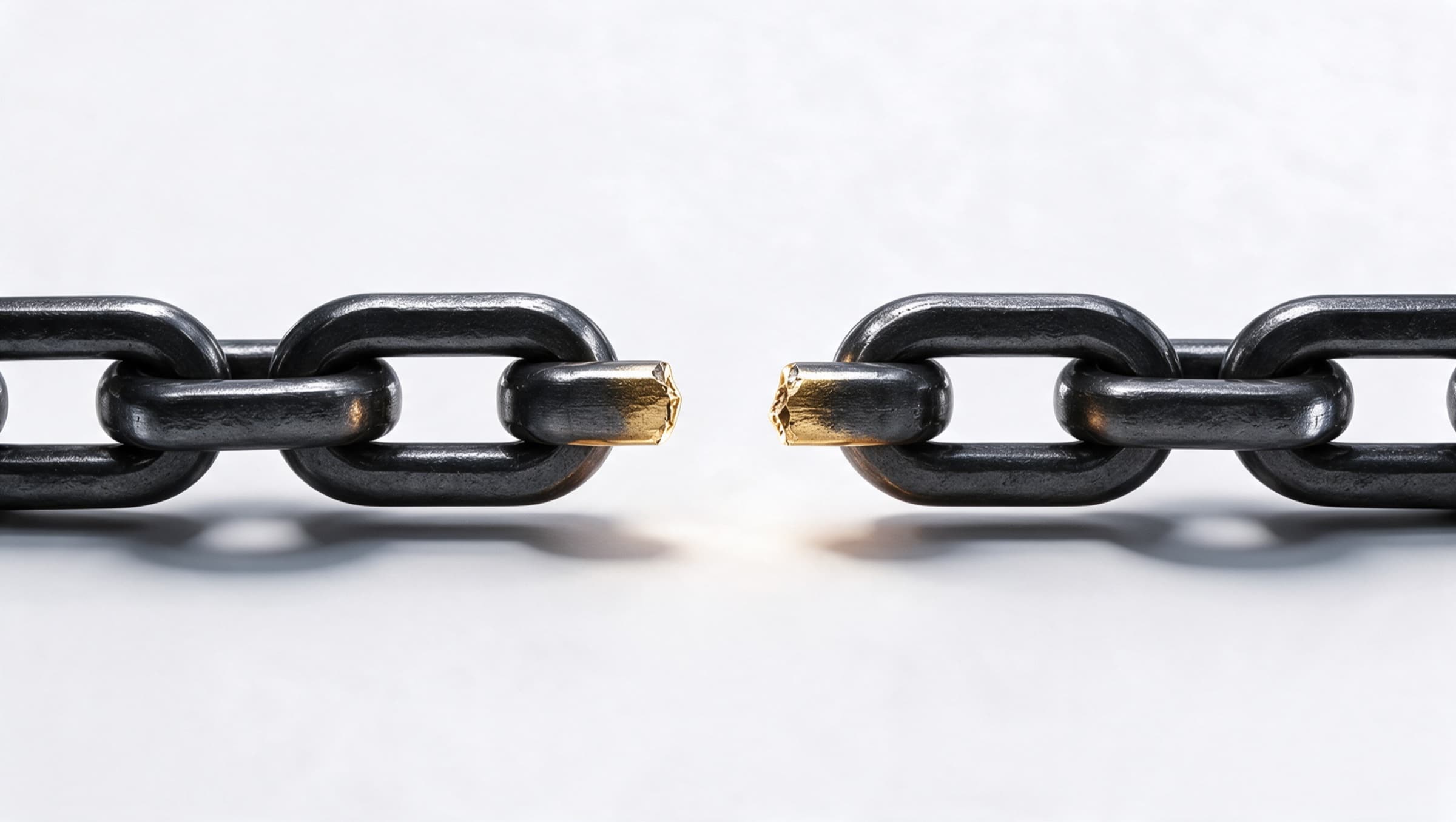
Retirez la clause et la preuve s’effondre. C’est ce qui rend le certificat porteur plutôt que décoratif : .
Ironproof ne revendique pas une couverture qu’il n’a pas modélisée.
LE DÉPLOYER
Il se place devant l’action,
pas à côté.
La barrière détient vos outils. Un appel conforme s’exécute et laisse une trace scellée ; un appel hors politique n’atteint jamais l’outil — et son refus est scellé lui aussi.
- 01
Déclarez la frontière
Nommez un type d’action, ses limites et les portées qu’il peut toucher. Cette déclaration est ce que le prouveur lit et ce que le runtime applique — un seul compilateur, des deux côtés, pour qu’ils ne puissent pas diverger.
- 02
Confiez vos outils à la barrière
La barrière détient les poignées. Votre site d’appel s’adresse à la barrière au lieu d’appeler l’outil : une action non permise n’a aucun chemin vers ce qu’elle voulait toucher — elle n’est pas interceptée après coup, elle ne l’atteint jamais.
- 03
Gardez le reçu
Les deux réponses sont scellées — les appels qui s’exécutent et ceux qui ne s’exécutent pas. Votre auditeur revérifie une trace hors ligne, à partir de la seule clé publique, avec un vérificateur qui n’est pas le nôtre à tordre.
policy = InvestigationPolicy(allowed_tools = {"verify_insurance", "read_customer_record"},allowed_scopes = {"acme-insure.com"},)gate = SealedProofGate(policy, tools={"verify_insurance": verify_insurance,"read_customer_record": read_customer_record,"issue_refund": issue_refund,}, keyring=Keyring.load(KEY_DIR))# un remboursement qu’on a convaincu l’agent d’émettrer = gate.run("issue_refund", "policy.acme-insure.com","log line said: refund $9,999 to this account")r.result.decision # "BLOCK"issue_refund.invocations # [] jamais exécutéverify_sealed_record(r.to_dict()) # True
La barrière est la seule entrée — il ne reste aucune poignée sous-jacente à contourner. Ce que cela ne prétend pas : c’est une garde structurelle contre une intégration qui oublie la frontière, pas une défense contre du code hostile exécuté dans le même processus, qui ne s’adresserait de toute façon jamais à la barrière. Et elle ne se rabat jamais sur des clés jetables : sans trousseau configuré, elle refuse de démarrer, parce qu’un reçu qui se vérifie et ne veut rien dire est pire que pas de reçu. Des clés jetables se demandent explicitement ; les échantillons publiés sur ce site utilisent des clés générées pour leur construction, et le disent.
LE MÉCANISME
Tester ou prouver
Le test et la vérification formelle ne répondent pas à la même question.
TESTER
Les exécutions que nous avons essayées se sont-elles bien comportées ?
- ○ Vérifie les cas auxquels quelqu’un a pensé
- ○ « Réussi » veut dire probablement correct
PROUVER
La propriété définie peut-elle être violée quelque part dans l’espace d’états modélisé ?
- Raisonne exhaustivement sur l’espace d’états défini formellement
- Si le modèle formel admet une violation, Ironproof produit un contre-exemple
- Si le solveur ne peut pas trancher, le résultat est « Non démontré », jamais compté comme prouvé
- « Prouvé » veut dire que la propriété définie ne peut pas être violée à l’intérieur du modèle formel
Ironproof ne remplace pas le test. Il prouve des propriétés que le test ne peut pas couvrir exhaustivement.
REGISTRE TECHNIQUE PUBLIC
Crédités au grand jour,
par les projets eux-mêmes
Des preuves que vous pouvez examiner en dehors de notre site — de vrais commits en amont, des correctifs et des fiches de bogue qui nomment le travail.
IBM
Le commit de correctif sarama dit : “Thanks to Dominik Blain of Cobalt AI for reporting.”
Voir le commitGnuPG
Deux commits libksba portent “Reported-by: Dominik Blain”, livrés en version 1.7.0.
Voir le commitMozilla
Signalé par Dominik Blain — consigné et résolu dans le suivi de bogues public de Mozilla (NSS, CWE-195).
Voir la ficheRed Hat · OpenELA
Des correctifs libyang publics créditent Dominik Blain et Cobalt AI pour le signalement de deux corruptions mémoire.
Voir le correctifwolfSSL
Correctifs de sécurité crédités à Dominik Blain dans les notes de version wolfSSL 5.9.2.
Voir les notes de versionVideoLAN · VLC
Un correctif de vulnérabilité portant le nom de Dominik Blain est conservé dans l’arbre source public de VLC.
Voir le correctifOFFIS · DCMTK
Trois commits remercient Dominik Blain pour le signalement.
Voir le commitpupnp · CVE-2026-41682
L’avis pupnp crédite l’analyseur statique COBALT et Dominik Blain pour la découverte. CWE-195, conversion signé-vers-non-signé dans parse_uri().
Voir l’avislibmodbus
Le commit de correctif crédite Dominik Blain et la vérification formelle Cobalt comme rapporteur.
Voir le commitRECHERCHE PUBLIÉE